Honouring a Legacy of Leadership: Chief Terrance Paul
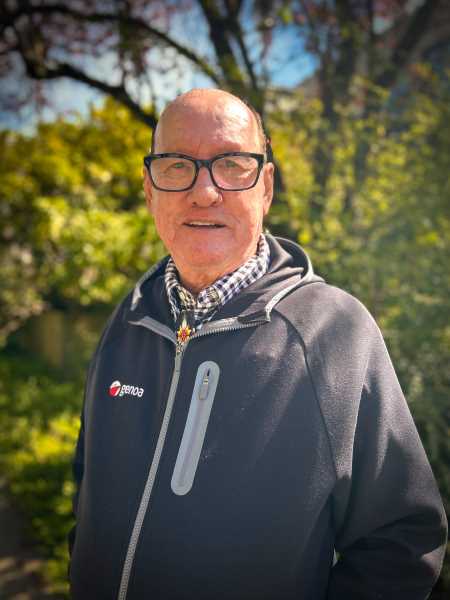
As Chief Terrance Paul concludes 18 years of service with the National Indigenous Economic Board, his legacy is defined not only by the length of his tenure, but by the clarity of his purpose: to ensure Indigenous voices are heard, respected, and reflected in decisions that shape this country. 

When Chief Paul reflects on his time on the Board, it is the people who stand out most vividly. “I’ve been on the board 18 years and it’s the people that I met on the board that’s really provided me with really good memories,” he says. He recalls the many trips taken together—journeys that were both informational and deeply moving. These experiences, he notes, opened doors to places and perspectives he might never otherwise have encountered. At the heart of it all was learning—learning about people, communities, and the shared responsibility of working toward a better future.

That sense of collective purpose has long defined Chief Paul’s leadership style. He speaks with deep respect for his fellow Board members, describing them as “very, very intelligent and smart people and very committed to the progress of our people here in this country.” For him, the Board is more than an advisory body; it is a gathering of minds determined to make a difference, even while acknowledging that “there is certainly a lot more to do.”

Chief Paul believes one of the Board’s most important impacts during his tenure has been shifting how government listens and responds to Indigenous perspectives. “I think that we’ve turned over a lot of people in their thinking about who we are,” he reflects. While barriers remain, he is clear-eyed about their nature. “All barriers are artificial. It’s just the way people think and how they look at things and look at life.” Through persistence and dialogue, he says, the Board has helped open “a lot of eyes and a lot of ears” within government, encouraging policymakers to pay closer attention to how their decisions affect Indigenous Peoples.

Chief Paul is candid about the work that remains. He sees a continuing gap in how Indigenous communities are considered when governments plan for the good of the country. Too often, he says, Indigenous Peoples are treated as an afterthought, with minimal resources set aside. In his view, the Board’s ongoing role is clear: to ensure Indigenous communities gain a fair and meaningful share of public investment and opportunity, and are never overlooked in national priorities.

This belief in equity and inclusion has guided Chief Paul throughout his career. First elected Chief of Membertou First Nation in 1984, he is a proud member of the community located in Unama’ki (Cape Breton Island), Nova Scotia. 

Under his leadership, Membertou became one of the most progressive, efficient, and sustainable Indigenous communities in Canada. The Nation doubled its land base and increased employment by nearly 80 per cent. Chief Paul oversaw the creation of a diverse and dynamic portfolio of enterprises, including the Membertou Trade & Convention Centre, the Membertou Entertainment Centre, the Membertou Market, the Gaming Commission, commercial fisheries, and multiple realty, insurance, and retail ventures. In 2002, Membertou made history as the first Indigenous government in Canada—and the world—to receive ISO 9001 certification, firmly establishing its credibility in the business world.

That same forward-looking vision was evident in Chief Paul’s role in the landmark acquisition of Clearwater Seafoods. Recognizing the opportunity to secure long-term prosperity for Mi’kmaq communities, he helped bring together six Mi’kmaq Nations to complete the largest single Indigenous investment in Canada’s fishery—an acquisition that now places Indigenous Peoples at the heart of a global seafood company harvesting nearly 80 million pounds of fish annually.

Beyond Membertou, Chief Paul is a national leader in Indigenous economic development. A founding member of the National Aboriginal Capital Corporations Association, he helped grow the organization from seven members to more than 50 Indigenous financial corporations across Canada. He also played a pivotal role in supporting Donald Marshall Jr.’s successful Supreme Court case affirming Mi’kmaq Treaty rights to fish—an outcome that resulted in roughly $600 million in benefits for Mi’kmaq communities.

Chief Paul’s contributions have been widely recognized. He was appointed to the Order of Canada in 2017 for his commitment, perseverance, and dedication to community. He has received multiple honorary doctorates, been inducted into several business halls of fame, and earned national recognition for his leadership, including Lifetime Achievement and Top CEO awards. Most recently, he was inducted into the Canadian Business Hall of Fame as a Companion and in 2025, he was appointed to the Federal Indigenous Advisory Council’s Major Projects Office.

When asked what advice he would offer to First Nations and Indigenous Peoples seeking to strengthen economic development in their own communities, Chief Paul focuses on the foundation. “Education is key in advancing the progress of our people, the prosperity of our people,” he says. He encourages individuals not to be afraid to look beyond the boundaries of their communities, while always staying grounded in where they come from. “Always have your mind centered on where you come from and that the people matter the most.”

Chief Paul describes the Board as an essential voice on behalf of Indigenous Peoples—one that provides informed, credible advice across government. “It’s a very important tool on behalf of the people to ensure that the government never forgets us,” he says.

As he steps away from the Board, Chief Paul leaves behind a legacy of resolve and perseverance. “Determination takes you a long way,” he says. “Have a mindset of never giving up.”

Through 18 years of dedicated service, Chief Terry Paul exemplified that mindset in action. His influence will be felt not only in policies shaped and perspectives shifted, but in the countless leaders he has inspired by showing what is possible when vision, determination, and respect for community guide the way forward.

“Chief Terry Paul has been a guiding light for the Board and a national treasure when it comes to First Nation economic development.  His visionary leadership and contributions to Indigenous economic inclusion in Canada have been both exceptional and inspirational.  Around the Board table, he has championed real transformational change and prosperity for Indigenous nations from coast-to-coast-to-coast.  I am truly honoured to have served beside him and to develop a lifelong friendship with this remarkable human being."

Dawn Madahbee Leach, NIEDB Chairperson
Notice of Opportunity: Chairperson (NIEDB)

Closing date: Monday May 18th, 2026

The National Indigenous Economic Development Board (NIEDB) is seeking applications to fill the position of Chairperson.

Established in 1990, the NIEDB is the only national, non-political organization of its kind in Canada mandated to provide strategic policy advice and guidance to the whole of the federal government on all matters pertaining to indigenous economic development. The Board serves as a vital link between Indigenous and non‑Indigenous business and community leaders, policymakers, legislators, and federal departments. Comprised of First Nations, Inuit, and Métis business and community leaders from across Canada, the NIEDB provides advice on Indigenous economic development priorities and supports governments in responding to the diverse needs and circumstances of Indigenous Peoples.

The Role

The Chairperson provides leadership to the Board and plays a key role in advancing Indigenous economic inclusion in Canada. The Chair runs Board meetings and guides Board deliberations, and represents the NIEDB in engagements with government, Indigenous communities and organizations, policy groups, and, on occasion, industry partners

The NIEDB consists of up to 13 members appointed by the Minister of Indigenous Services Canada (ISC). The Chair is appointed to a term of up to four years. The Executive consists of the Chairperson, the Vice‑Chairperson and the Member-at-Large. Board members are First Nation, Métis and Inuit and may reside anywhere in Canada.

The Board generally holds:

The Chair is expected to dedicate approximately 30 days per year for meetings (including preparation and travel), plus an additional five days for committee work and other Board‑related responsibilities. All members must be willing to travel and attend Board meetings in person.

Who Can Apply

Candidates for Chairperson must be Indigenous leaders with significant experience in business and economic development. They must demonstrate strong governance expertise, ideally in a chair or senior leadership role within a national or regional organization, proof of Indigeneity and be widely recognized for their leadership, integrity, and trustworthiness.  Understanding the policy-making process and the federal government structure are assets for the position.

Essential Qualifications

Education

Experience

Knowledge

Asset Qualifications

Personal Skills

Conditions of Employment

Remuneration: Currently under review by the Minister

Additional Information

The Government is committed to ensuring appointments are representative of Canada’s regions and official languages, as well as employment equity and diversity with respect to women, Indigenous peoples, persons with disabilities and visible minorities. The selected candidate must comply with the Ethical and Political Activity Guidelines for Public Office Holders. The Guidelines are available under Open and Accountable Government, Annex A.

The selected candidate will be subject to the Conflict of Interest Act. For more information, please visit the Office of the Conflict of Interest and Ethics Commissioner.

Interested candidates should forward their curriculum vitae and/or letter of application to the attention of:

Indigenous Services Canada

National Indigenous Economic Development Board Secretariat

cndeaniedbsecretariat@sac-isc.gc.ca

2024 Indigenous Economic Progress Report

The National Indigenous Economic Development Board (NIEDB) announces the release of the 2024 Indigenous Economic Progress Report. This report assesses the economic well-being and progress of Indigenous peoples in Canada, measuring key indicators such as employment, income, and education to inform policy and support Indigenous economic development initiatives.

Read the full 2024 Indigenous Economic Progress Report

Release of the NIEDB's 2024-2027 Strategic Plan

The National Indigenous Economic Development Board is pleased to present the Strategic Plan for 2024-2027.

Since its founding more than 30 years ago, the NIEDB has remained committed to advancing its vision of Indigenous economic self-sufficiency and socioeconomic parity with the rest of Canada.

“Across Canada, Indigenous Peoples are creating innovative socio-economic opportunities for our communities, as we have always done. We are taking our future into our own hands, exercising our jurisdictional authorities, and strengthening our communities as true Nations.”

Dawn Madahbee Leach, Chairperson of the NIEDB

The 2024-2027 NIEDB Strategic Plan articulates a path forward to build a strong and enduring foundation for economic reconciliation. The Plan establishes three priority areas of focus for the Board:

  1. The National Indigenous Economic Strategy
  2. Indigenous Economic Inclusion
  3. Indigenous Economic Data

The NIEBD invites you to join in celebrating this endeavor and to stay informed about the Indigenous economic development in Canada.

Read the full report here:

2024-2027 NIEDB Strategic Plan

New National Indigenous Economic Prosperity Institute

Reported by The Canadian Press on June 6th, 2024, the First Nations University of Canada celebrated the two-year anniversary of the National Indigenous Economic Strategy, a groundbreaking Indigenous-led initiative dedicated to achieving socioeconomic parity for Indigenous Peoples in Canada.

A new institute is in the works that would track Indigenous economic prosperity in Canada by collecting data on population, businesses, land and resources.

"The National Indigenous Economic Prosperity Institute will serve as a catalyst for change, promoting innovative solutions and fostering economic resilience within Indigenous communities and non-Indigenous communities."

This announcement and celebration is not just about looking back; it's about reaffirming commitment to Indigenous economic reconciliation and paving the way for future generations.

The Mastercard Foundation is putting forward $6 million over five years, while the McConnell Foundation is adding another $1.5 million over the same time frame.

"Full reconciliation with Indigenous Peoples will not happen without economic reconciliation. It is not only the fair and right thing to do, but there is a strong and compelling business case for all Canadians."

– Dawn Madahbee Leach, Chairperson, National Indigenous Economic Development Board

Read the full article here

For even more information, please visit: National Indigenous Economic Strategy marks two years with the launch of the Indigenous Economic Prosperity Institute - FNUniv.ca

First Nations University of Canada celebrates the two-year anniversary of the National Indigenous Economic Strategy with the announcement of a new institute that will track Indigenous economic progress in Canada.

Economic Reconciliation: Growing Canada’s Economy

The National Indigenous Economic Development Board is pleased to announce the release of the report, Economic Reconciliation: Growing Canada’s Economy.

In 2022, the NIEDB updated the estimates in the report, “Reconciliation: Growing Canada’s Economy" by $27.7 Billion using Statistics Canada data for 2016, the most recently available data at the time. In 2024, the NIEDB updated the estimate again, this time using 2021 Census data from Statistics Canada.

Canada is experiencing a historic labour shortage which hinders economic growth. Demographic shifts mean more workers are retiring and fewer are entering the workforce. To maintain living standards, productivity and workforce participation must increase. Indigenous peoples, a younger and faster-growing population, can significantly boost workforce productivity. Projections indicate their increasing share of the population, making their productivity crucial for sustained growth.

Focusing on Indigenous workers, especially youth, is vital for addressing productivity challenges. Statistics Canada shows Indigenous workers with post-secondary training often have higher average incomes than non-Indigenous peers, proving that education and training can close productivity gaps. However, significant economic disparities persist between Indigenous and non-Indigenous populations, highlighted by numerous studies.

Closing these gaps and expanding education and training for Indigenous workers could greatly enhance their economic contribution and positively transform the Canadian economy overall. A 2022 study by the Conference Board of Canada found that the current labour shortage costed the Canadian economy $25 billion in 2020. In this report, the NIEDB estimates that closing economic gaps between the Indigenous and non-Indigenous workforces could raise Canadian GDP by $26.7 billion. This paper describes the methodology for this estimate.

Economic Reconciliation: Growing Canada's Economy

The Future of Employment Equity in Canada

The report, “A Transformative Framework to Achieve and Sustain Employment Equity” is a comprehensive review of the Employment Equity Act conducted by the Employment Equity Task Force. This is the first time since the legislation was adopted in 1986 that an independent task force has been established to review the entire employment equity framework.

In February 2024, the Chair of the Employment Equity Task Force, Professor Adelle Blackett, met with the National Indigenous Economic Development Board (NIEDB) to provide an overview of the report. NIEDB Members Ruth Williams and Sandra Sutter are also members of this task force.

“Our task force heard one message loud and clear: Employment equity is not optional for Canada. For a society that is as deeply diverse as ours to flourish, we must prioritize achieving and sustaining employment equity in the workplace.” (pg. 2)

The Employment Equity Act requires federally-regulated employers to take steps to eliminate barriers to equity in the workplace for disadvantaged groups. Access to stable and fulfilling employment is essential for economic empowerment and prosperity. By ensuring that all Canadians have equal opportunities in the workforce, we will help build a stronger and more inclusive society.

Release of the NIEDB’s Report: 2019 Indigenous Economic Progress Report Recommendations Revisited

Canada’s history is marked by a legacy of colonization that has had devastating effects on Indigenous Peoples. From the forced removal from ancestral lands to the suppression of culture and language, Indigenous communities have endured centuries of systemic oppression. Today, the call for reconciliation and accountability is louder than ever, as Canadians grapple with the implications of this history and seek a path forward towards healing and justice.

Back in 2022, federal departments and agencies were tasked by the NIEDB to review the recommendations in the 2019 Indigenous Economic Progress Report, and to report on any actions which may have served to advance specific recommendations since the report was issued. The results of this exercise are contained in this new report.

Accountability is a key component of reconciliation. It involves holding individuals, institutions, and governments accountable for past wrongs and ensuring that they are not repeated in the future. Accountability requires transparency, honesty, and a willingness to learn from mistakes. It also means empowering Indigenous Peoples to participate fully in decision-making processes that affect their lives.

Reconciliation is not an easy or quick process, but it is a necessary one if we are to move towards a more inclusive and just society. By acknowledging the past, listening to Indigenous voices, and taking meaningful action, we can build a better future for all Canadians. Reconciliation is not just a goal; it is a journey that requires commitment, compassion, and courage. Together, we can build bridges of understanding and create a more inclusive and equitable Canada for future generations.

NIEDB 2019 Indigenous Economic Progress Report Revisited

Indspire Honours Victoria LaBillois with the Business & Commerce Indigenous Excellence Award

The Indspire Awards recognize Indigenous professionals and youth who demonstrate outstanding career achievement, promote self-esteem and pride for Indigenous communities, and provide inspirational role models for future generations. This year’s event marks the 31st anniversary of the awards, a testament to the enduring commitment of Indigenous peoples to pursuing excellence in multiple fields of endeavour.

We are thrilled to extend our warmest congratulations to Victoria LaBillois, Vice-Chairperson of the NIEDB, on her well-deserved recognition in Indigenous Business and Commerce. Her exceptional accomplishments serve as an inspiration to those who aspire to make a meaningful impact in the world of Indigenous business. By blazing trails and breaking barriers, Victoria is a source of empowerment and inspiration for us all.

For more information, please visit: Indspire Honours Indigenous Excellence with Announcement of 2024 Indspire Awards Recipients | Indspire

The Canadian Council For Aboriginal Business Honours Hilda Broomfield Letemplier with the 2024 Aboriginal Business Lifetime Achievement Award

The Canadian Council for Aboriginal Business (CCAB) has recently announced five award recipients for CCAB’s 40th Anniversary Gala Award Dinner this May.

Hilda Broomfield Letemplier has been awarded the Aboriginal Business Lifetime Achievement Award. This award honours Indigenous business leaders who have built full and rich careers. It pays tribute to outstanding Indigenous business people across the country who are well-advanced in their careers and have built a legacy that serves as an example of excellence. Past NIEDB Member recipients of this award include Dawn Madahbee Leach and Chief Terry Paul.

Hilda has dedicated her work to fostering sustainable business growth. Her unwavering commitment to cultural preservation, coupled with a keen business acumen, has contributed greatly the empowerment and growth of Indigenous women in business. She has set the standard for future generations to follow. Hilda’s hard work and dedication is an inspiring testament to what economic reconciliation looks like in real time.

We extend our heartfelt congratulations to Hilda, and the additional award recipients: Nyden Iron-Nighttraveller, Annette Morgan, Mark Little and Det’on Cho Group of Companies. Congratulations!

For more information, please visit: Awards - CCAB