ADAAWE Indigenous Business Hub empowers First Nations, Inuit, and Métis entrepreneurs in the National Capital Region and surrounding communities with the tools they need to succeed. In December 2025, the NIEDB held its quarterly meeting at ADAAWE and learned about how this hub supports Indigenous entrepreneurs by centering community and culture.
Background
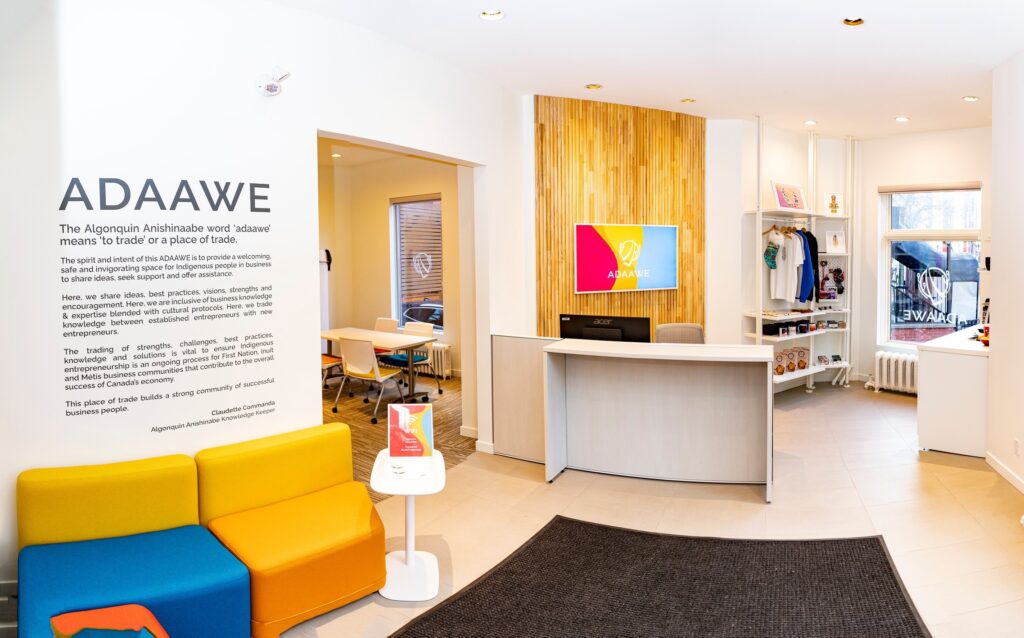
Located on unceded Algonquin Territory, ADAAWE takes its name from the Algonquin Anishinaabe word meaning “to trade,” reflecting the deep connection between commerce and community. The hub offers a culturally grounded space where First Nations, Inuit and Métis entrepreneurs can develop skills, build networks, and grow sustainable businesses. Its facilities include a co-working space, tech library, pop-up shop, and gathering spaces that foster collaboration and innovation.
A cornerstone of ADAAWE is the Wejibàbandan Indigenous Business Incubator, a 15-week program offering mentorship, training, a living wage, and startup funding. Participants leave with business and financial plans, branding assets, and strengthened leadership skills—all rooted in Indigenous teachings.
Challenges
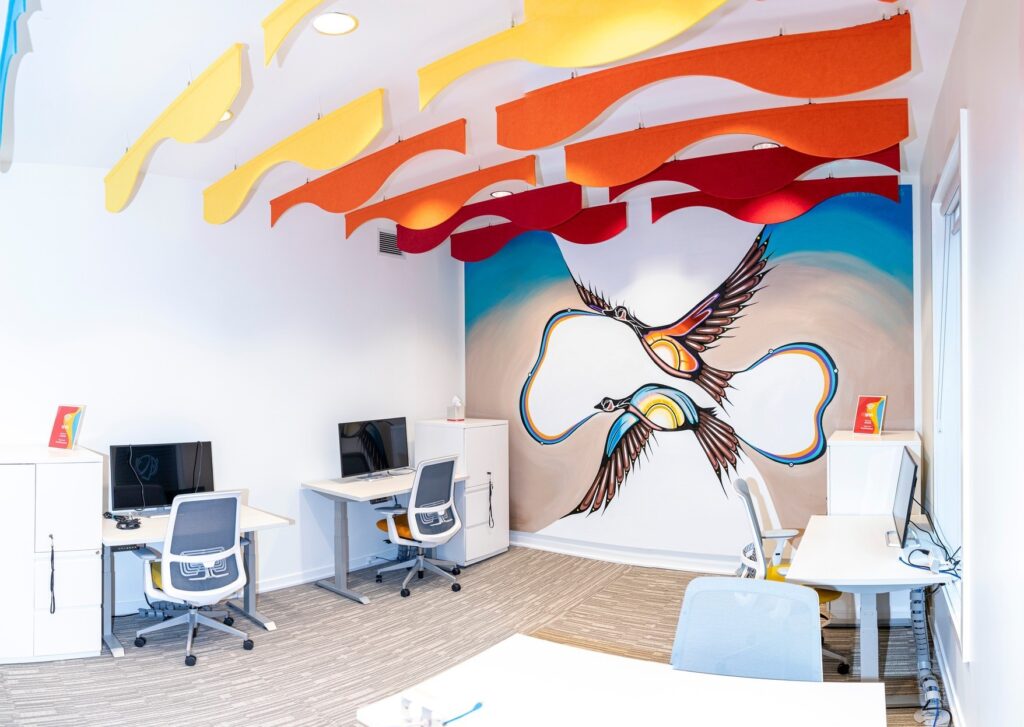
Before ADAAWE, Indigenous entrepreneurs in Ottawa lacked a dedicated space to access business support or connect with peers. Early feasibility studies by the National Aboriginal Capital Corporations Association (NACCA) highlighted a clear gap in services, as well as the need to foster visibility and connection within the local Indigenous business community. Many entrepreneurs reported facing barriers such as limited access to resources, isolation and uncertainty navigating business ownership.
As ADAAWE gained momentum, a new challenge emerged: rapid growth. Membership surged to more than 300 entrepreneurs, putting pressure on programming capacity and infrastructure. This growth also reflected broader systemic barriers faced by Indigenous entrepreneurs across Canada, such as historic underfunding and the lack of culturally safe business environments.
Solutions
ADAAWE responded to these challenges with strategic growth rooted in strong partnerships and Indigenous knowledge. The hub scaled its mentorship programs, increased training opportunities, and enhanced access to co‑working and technical resources. By centering Indigenous Ways of Knowing and embedding cultural values such as the Medicine Wheel teachings into programming, ADAAWE ensures entrepreneurs can grow their ventures without compromising identity.


Equally important, the hub fosters a strong sense of community. Entrepreneurs are encouraged to collaborate, share knowledge, and support each other through procurement and partnerships. ADAAWE’s onsite pop-up shop and annual holiday market create avenues for members to test products, learn retail practices, and reach customers, while networking events and workshops build lasting connections.
Results
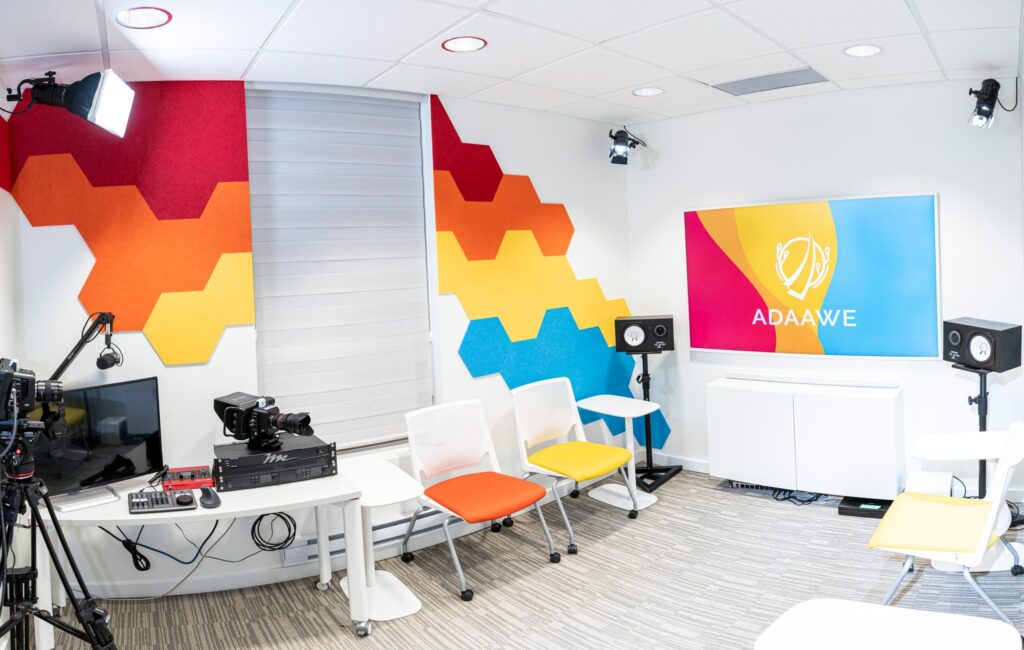
ADAAWE’s impact has been significant. Membership has grown from a small group to a vibrant community of more than 270 entrepreneurs in just a few years, supported by more than 250 workshops, over 250 office hour sessions of mentorship and dozens of partnerships. The hub’s spaces – from production studio to its gallery and boardroom – are busy with creativity, collaboration, and cultural expression.
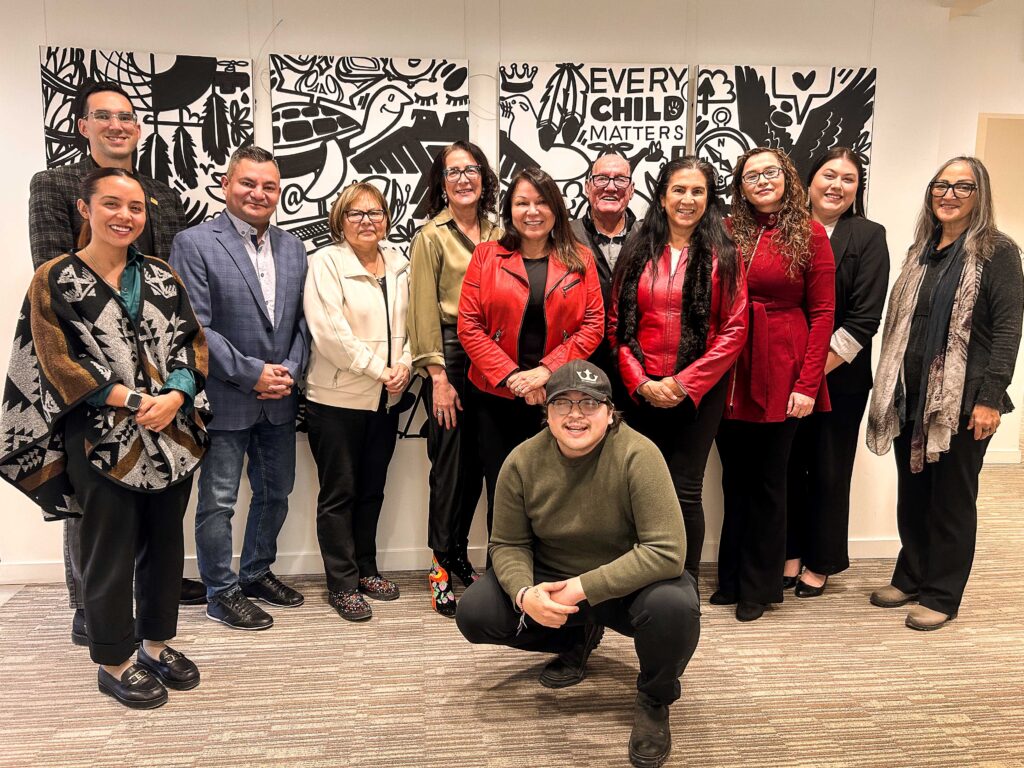
NIEDB members at ADAAWE with Zachary Pache, ADAAWE Lead, and entrepreneurs from the Wejibàbandan Business Incubator program
Entrepreneurs are not only launching businesses but strengthening an interconnected local economy. Members frequently hire and source from one another, creating a ripple effect that extends beyond individual success.
ADAAWE has become a model of what culturally grounded business support can achieve. It demonstrates how investing in Indigenous entrepreneurs leads to stronger communities, vibrant local economies, and intergenerational knowledge‑sharing.
In a city where Indigenous entrepreneurs once faced isolation and limited resources, ADAAWE now stands as a thriving hub of opportunity – proving that when Indigenous entrepreneurs are given space to rise, they uplift not only their business, but entire communities.
ADAAWE is demonstrating what’s possible when Indigenous entrepreneurship is grounded in culture, community, and connection. It’s a model for the future of Indigenous business development, and NACCA is committed to building on this success—exploring opportunities to replicate hubs across the country while expanding digital supports so more First Nations, Inuit, and Métis entrepreneurs can connect, grow, and thrive.
Shannin Metatawabin, CEO, NACCA