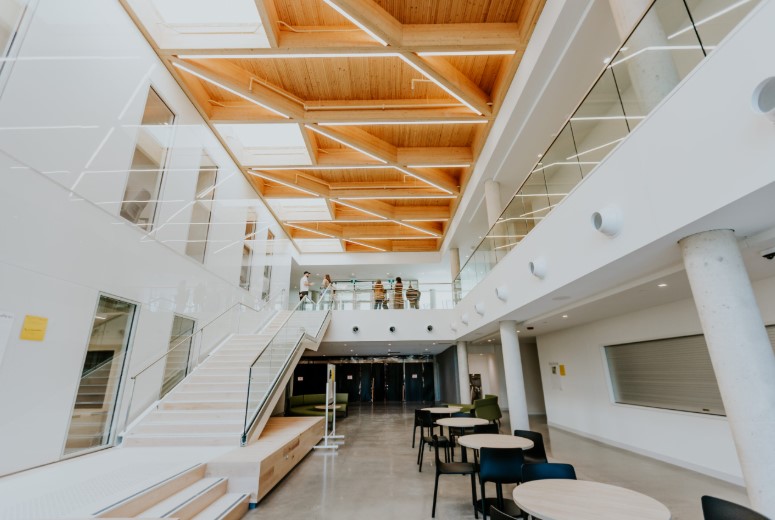
Kanatahkwèn:ke, meaning “the place where we put things away safely,” is more than a new building in Kahnawà:ke. It is a landmark community-driven achievement that reflects decades of vision, collaboration, and resilience. Designed as a permanent home for language, culture, arts, and tourism, the Kanatahkwèn:ke Cultural Arts Centre stands as a powerful expression of Kanien’kehá:ka self-determination. The Board visited Kahnawà:ke in September 2025 and learned firsthand how the Kanatahkwèn:ke project is weaving together culture, tourism, and local investment to build long-term prosperity.
Background
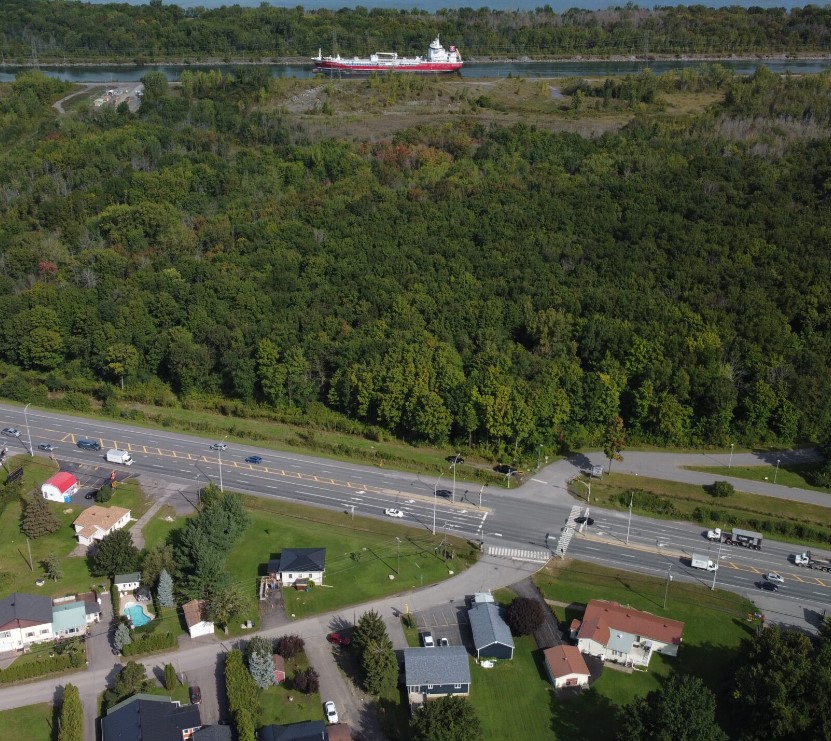
Kahnawà:ke is a Kanien’kehá:ka (Mohawk) community located on the south shore of the Saint Lawrence River in Quebec, across from Montreal. One of several self-governing Mohawk Nation territories within Canada, Kahnawà:ke derives its name from the Mohawk word kahnawà:ke, meaning “place of the rapids.” The community has long been recognized for its strong governance, entrepreneurial spirit, and commitment to cultural continuity.
The Kanatahkwèn:ke project began as a response to a pressing need: a permanent, purpose-built home for the Kanien’kehá:ka Onkwawén:na Raotitióhkwa Language and Cultural Center (KORLCC), which includes the community’s cultural centre and museum. As planning advanced, it became clear that other key organizations shared similar needs. Turtle Island Theatre required a dedicated performance space, and Kahnawà:ke Tourism sought a central visitors’ hub. What began as a single-facility concept evolved into a shared vision for a multi-purpose cultural arts centre.
This vision was anchored in a formal partnership between KORLCC, Turtle Island Theatre, Kahnawà:ke Tourism, and the Mohawk Council of Kahnawà:ke. Together, these partners formed the Building Committee, a collaborative decision-making body that ensured the project would reflect community priorities at every stage.
Challenges
The path from vision to reality was complex and lengthy. The project launched with an extensive year-long feasibility study in 2017, followed by multiple funding applications to support the infrastructure required for a project of this scale. Securing community support was essential; in June 2018 and again in January 2019, community-wide consultations and votes were held to confirm both the continuation of the project and the selected site. While these votes resulted in strong majority support, they also reinforced the responsibility to deliver a project that truly served the community.
External factors added further challenges. The COVID-19 pandemic caused significant delays and dramatically increased construction costs due to inflation and global supply chain disruptions. As a result, earlier cost estimates became outdated, requiring the project team to revisit budgets while maintaining momentum and funder confidence. For a community-led project with multiple partners, balancing ambition with financial reality demanded persistence, adaptability, and trust.
Solutions
Progress accelerated in early 2022 when Kanatahkwèn:ke was approved for $16 million in funding through Crown-Indigenous Relations and Northern Affairs Canada’s Cultural Spaces Indigenous Programs. This critical investment allowed the project to move from planning into active development, while also triggering updates to project designs and costs to reflect post-pandemic market conditions.
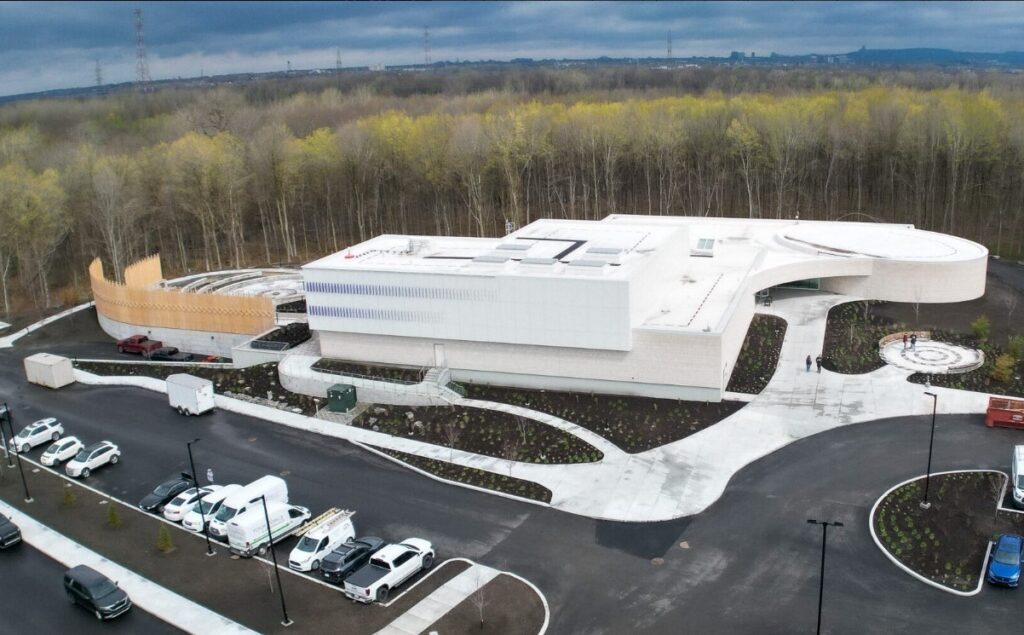
At the same time, a significant Capital Campaign was launched and led by PlanIT Consulting & Communications. Drawing on support from across Turtle Island, the campaign united community members, allies, and influential Indigenous leaders around a shared goal. The emphasis on relationship-building and community pride proved highly effective. By 2025, the project had secured approximately $21 million through the campaign, with nearly $16 million raised directly through community donations and external partners.
Regular communication, transparency, and continued community engagement helped sustain trust throughout construction. The decision to build in a wooded area adjacent to Kahnawà:ke Survival School further reinforced the project’s cultural and educational foundations, while the use of local contractors ensured that economic benefits stayed within the community.
Results
In spring 2026, the $56 million Kanatahkwèn:ke Cultural Arts Centre officially opened featuring a language and cultural centre, a temperature-controlled museum designed for the safe display and repatriation of cultural items, a theatre, offices, a café, and a visitors’ centre.
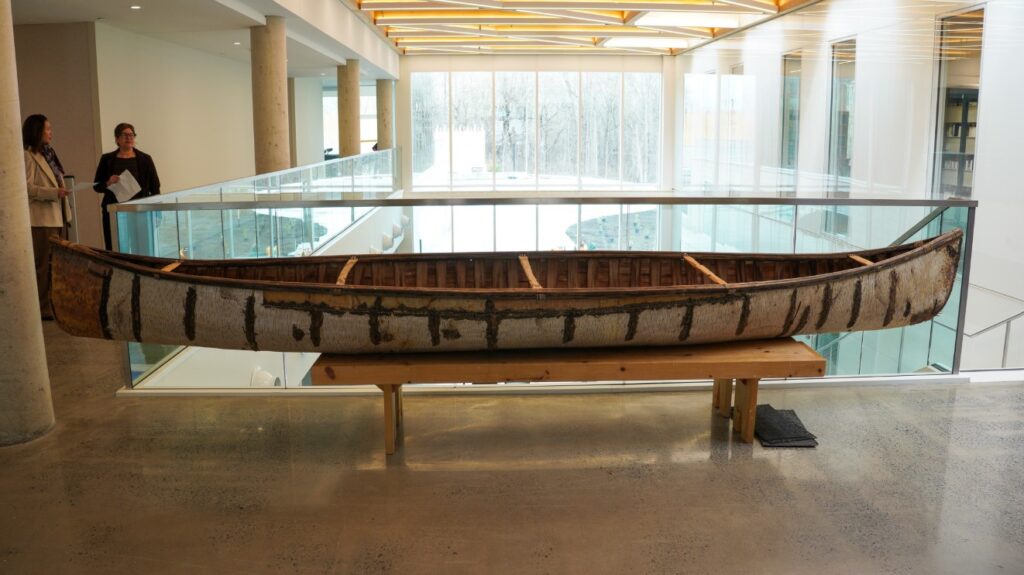
Beyond bricks and mortar, the results are far-reaching. The centre strengthens language revitalization, supports Indigenous performing arts, and positions tourism as both an economic driver and a pathway to reconciliation. In 2024, Kahnawà:ke Tourism generated $1.26 million in visitor spending, demonstrating the economic impact of culture-based tourism.
Kanatahkwèn:ke is a flagship example of community-led development integrating culture, governance, and economic growth. As people begin to walk through its doors, Kanatahkwèn:ke is fulfilling its purpose: safeguarding the past, animating the present, and creating new opportunities for future generations in Kahnawà:ke.